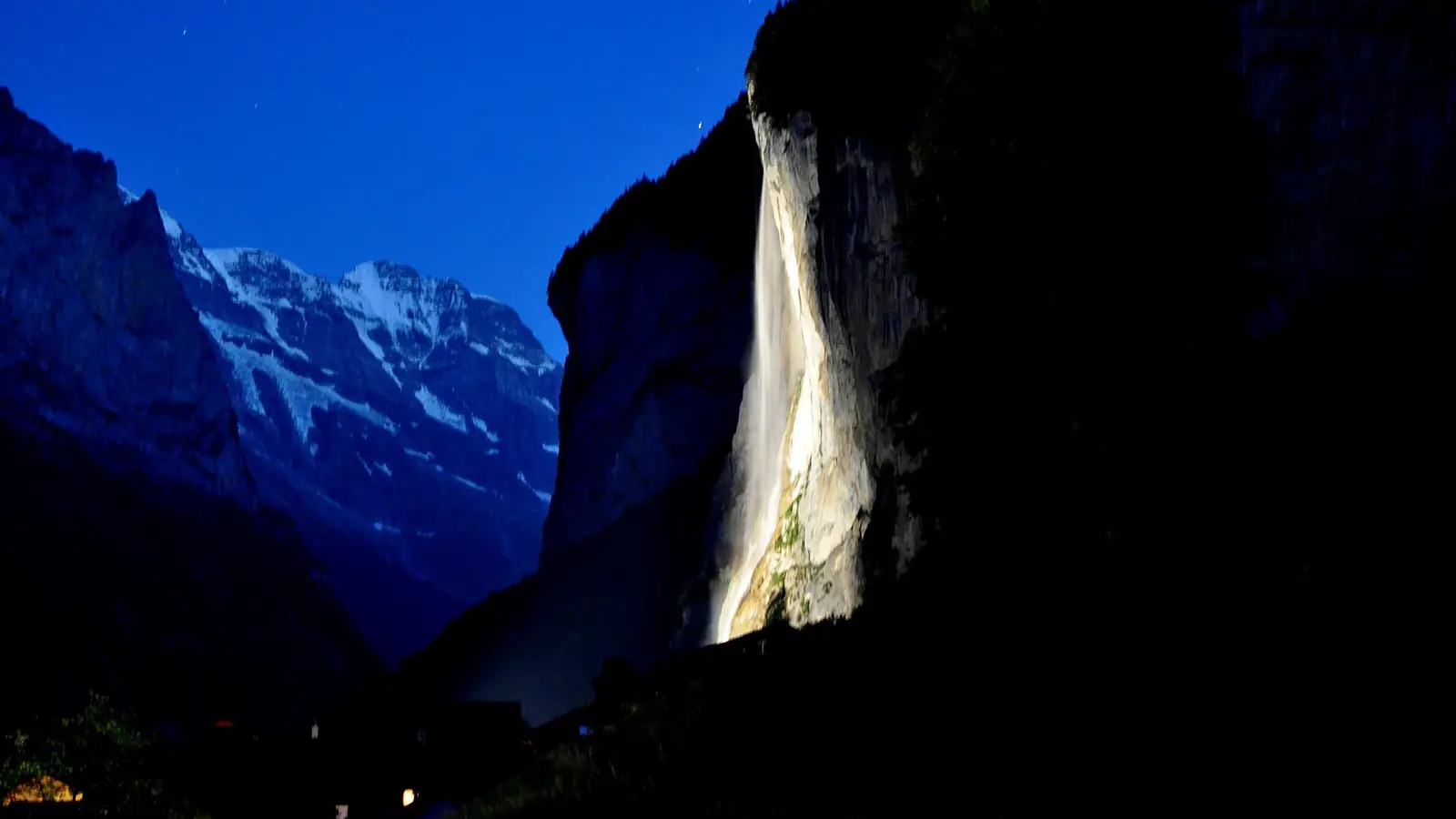
Staubbach Falls is a tall, narrow subject against a huge wall, so framing and light matter more than gear.
Spots, easiest first
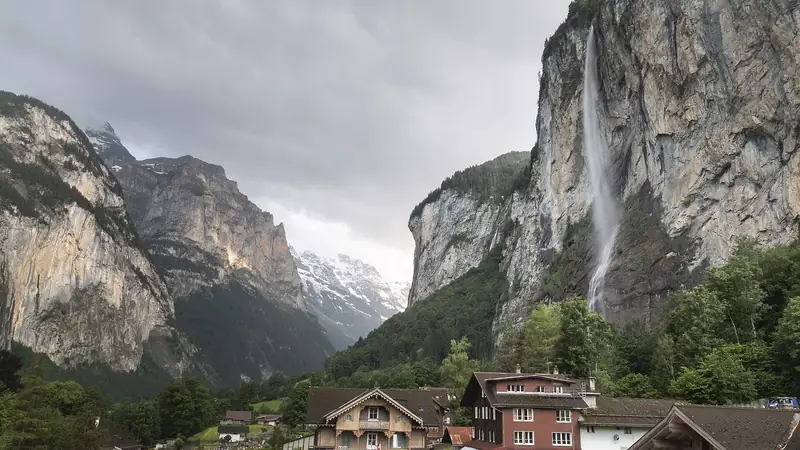
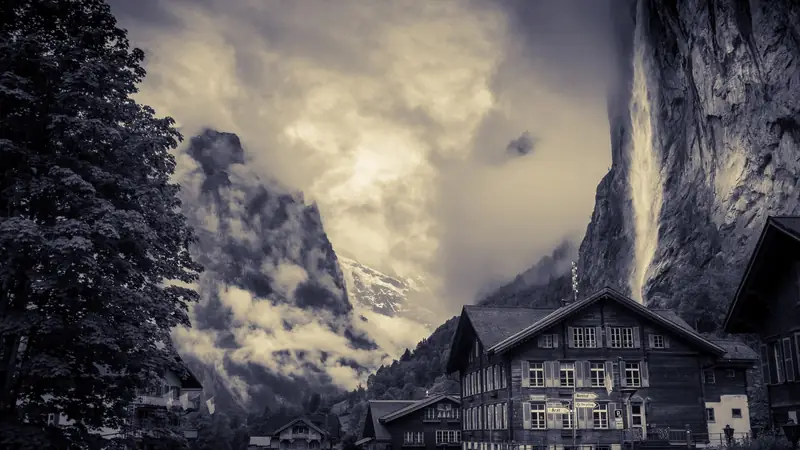
- Village base: the standard postcard view; use chalets or trees for scale. Best at golden hour.
- Behind the falls: a spray-filled view toward the village, reachable on the gallery path from about May to October.
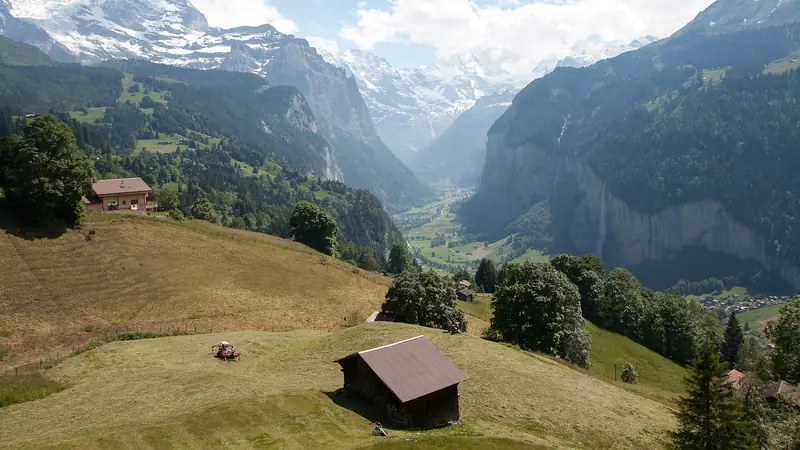
- Trail viewpoints: on the path toward Wengen, the photography guide lists three viewpoints about three minutes apart. The first is in a field beside the path; the third, above the railway tunnel, makes the falls appear closer.
- From the Wengen train: sit on the right going up or the left coming down, and be ready as the train leaves the last tunnel before Wengen.
Settings
| Look | Setting |
|---|---|
| Freeze droplets | Fast shutter, e.g. faster than 1/200 from the train |
| Silky water | Slow shutter on a tripod |
| Misty, backlit | Early morning |
Season and light
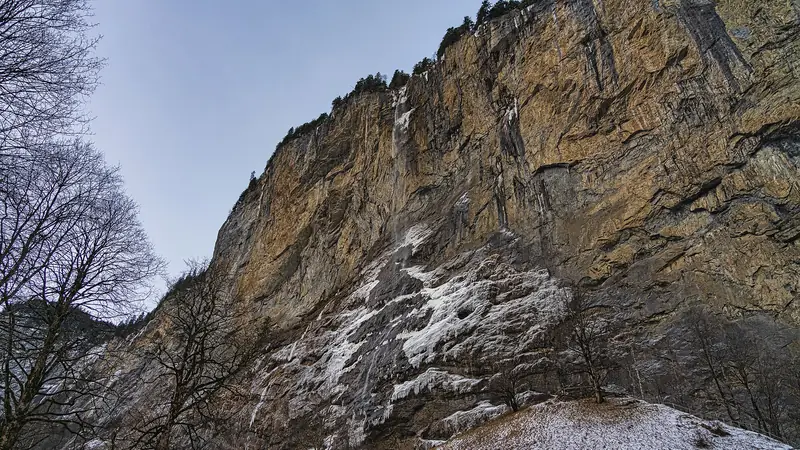
Late May to early July has the most water. Dry autumn or November makes the falls thin, as the guide notes. Evening light gives warm tones on the limestone; see best time to visit.
Keep a lens cloth: the spray reaches the platforms and the lens fogs.
See it from the air
Paragliding over the valley gives a view few can get from the ground; it depends on weather.
More walks: hiking near the falls.
Frequently asked questions
Where is the best place to photograph Staubbach Falls?
From the village at golden hour for the classic view, or from the first trail viewpoints on the path toward Wengen, where trees frame the falls.
What shutter speed for Staubbach Falls?
A fast speed freezes the spray, a slow speed on a tripod makes it silky. From the Wengen train use a speed faster than 1/200.
When is the best light?
Sunrise and sunset give soft light and fewer people according to one guide. Late May to early July has the most water.
Some links are affiliate links: if you book through them we earn a small commission at no extra cost to you. It funds the research behind this site.